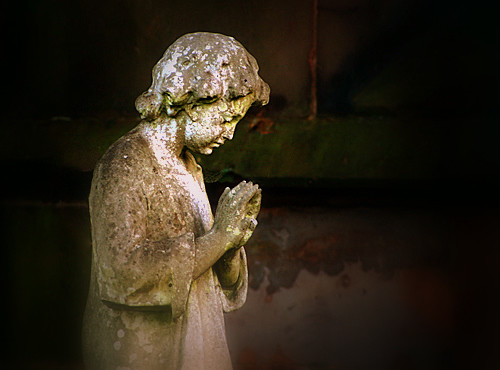
Saying For Today: Sated by the body of religion, first coming, one is led to and beyond the edge, to an inner glow that manifests in a brightness of face and flesh.
LOTUS OF THE HEART
Everyone is Welcome Here
Living in Love beyond Beliefs
But those who possess not only the faculties of sensation and intellection, but have also obtained spiritual and supernatural grace, do not gain knowledge only through created beings, but also know spiritually, in a manner beyond sense and intelligence, that God is spirit, for they have become entirely God, and know God in God.
*St. Gregory Palamas, Discourses (b. 1296)
Sharon Olds (b. 1942), poet laureate 1998-2000, in “The Knowing,” tells of lovemaking beyond lovemaking.
When I wake again, he is still looking at me, As if he is eternal. For an hour We wake and doze, and slowly I know That though we are sated, though we are hardly Touching, this is the coming the other Coming brought us to the edge of—we are entering, Deeper and deeper, gaze by gaze, This place beyond the other places, Beyond the body itself, we are making Love.
Prayer of Heart leads us to the edge of this Unknowing. Heartful Prayer, lovemaking with the Other in the now leads us beyond the now. We are in the now; indeed, we are both in and outside the now. The now has become another word for its opposite, as eternity has become another word for now.
This is a fulfillment of the first coming of prayer, the prayer that opens the veil that has led us to believe there is only this world now for us. Jesus, intent to lead us beyond the first coming of religion to the other coming, spiritual and within, says, "Do not think that I have come to abolish the Law or the Prophets (i.e., the Hebrew Scriptures); I have not come to abolish them but to fulfill them” (Matthew 5.17, ESV). Christ is fruition, even before the first coming of religion then or now; Love is fruition.
This "place beyond the other places" is an intensely inner journey, though radiating outward silently. Says St. Dmitri of Rostov (18th Century, Orthodox):
To kindle in his heart such a divine love, to unite with God in an inseparable union of love, it is necessary for a man to pray often, raising the mind to Him. Far as a flame increases when it is constantly fed, so prayer, made often, with the mind dwelling ever more deeply in God, arouses divine love in the heart. And the heart, set on fire, will warm all the inner man, will enlighten and teach him, revealing to him all its unknown and hidden wisdom, and making him like a flaming seraph, always standing before God within his spirit, always looking at Him within his mind, and drawing from this vision the sweetness of spiritual joy.
The consummation of this inner conjugal unioning, Spirit in spirit, spirit in Spirit, is "sweetness of spiritual joy." Sated by the body of religion, first coming, one is led to and beyond the edge, to an inner glow that manifests in brightness of face and flesh. The body is being, now, transformed by Grace, as the Light arises from the inner spirit and permeates the flesh. So, the journey is from flesh to spirit, then from spirit to flesh.
For the mature spiritual being, trained years in this inward Grace, he or she lives in lovemaking day and night. And mind does not have to participate knowingly--and usually does not--, for mind participates by being drawn into the heart.
Yes, sate yourself on religion, if you wish. Sate yourself to opening to the inner Light, Light of Christ. Then, you stand in the Divine, you rest nowhere, for you are one with One everywhere: you no longer make or share love, for you are Love and, so, share yourself as Love Itself. You enter fulfillment of making love to externals of faith and belief: you die to all that--now you enjoy religion by the consequence of death to it, so you do not abandon the body of faith and Grace--, for it no longer is in the mingling with the Light, and you resurrect a spiritual person.
The Light is Christ, source of Grace, very Light hidden and, yet, manifested in the flesh of Jesus of Nazareth. This Christ is Grace. As the Church Fathers have taught, you become en-goded, or divinized, by participating in God--we can say, "You become Love by participating in Love," and to be in Love is to be in Christ, for Christ is Love. Indeed, you become the shining flesh of Christ, a tabernacle of Love moving about in the desert of this world, witnessing by simply being and shining to the inner Life beyond religion, the true Promised Land, the New Jerusalem.